

Half the oxygen you’re breathing right now comes from microscopic ocean plants. They’re disappearing at an alarming rate—and taking marine life with them.
- 40% decline since 1950
- 3 billion people at risk
- 50% of Earth’s oxygen is threatened
Watch: Ocean Scientists Explain the Phytoplankton Crisis
Picture yourself standing at the beach. Waves crash rhythmically. Seabirds circle overhead. The ocean stretches endlessly before you, seemingly eternal and unchanging. Now imagine that same ocean in twenty years—eerily silent, its waters crystal clear not because they’re clean, but because they’re empty. No fish jumping. No birds are diving. Just vacant blue water stretching to the horizon.
This isn’t science fiction. It’s the trajectory we’re on right now, and it starts with something you can’t even see: phytoplankton. These microscopic organisms—so small that millions could fit in a single drop of water—form the foundation of all ocean life. They produce half the oxygen you breathe. They feed everything from sardines to blue whales. And they’re vanishing at a rate that should terrify anyone who values breathable air, affordable food, or economic stability.
Right now, as you read this sentence, you’re breathing oxygen that came from phytoplankton floating in oceans thousands of miles away. Every other breath you take traces back to these tiny organisms, and they’re disappearing.
- 40% Global phytoplankton decline since 1950
- 3B+ People who depend on seafood for protein
- $400B Annual fishing industry value at risk
The Numbers Don’t Lie: A 75-Year Collapse
Let’s talk about what’s actually happening in numbers you can understand:
| Metric | Impact | Source |
|---|---|---|
| Global phytoplankton decline | 40% since 1950 | Nature Climate Change, 2023 |
| People dependent on seafood | 3+ billion globally | FAO Fisheries Report, 2024 |
| Oxygen production at risk | 50% of Earth’s total | NOAA Ocean Facts, 2024 |
| Fishing industry value | $400 billion annually | World Bank Maritime Economics, 2025 |
| Ocean acidification increase | 30% more acidic since 1800 | IPCC Ocean Report, 2024 |
| Dead zone expansion | 6,700+ square miles (Gulf of Mexico) | NOAA Hypoxia Report, 2025 |
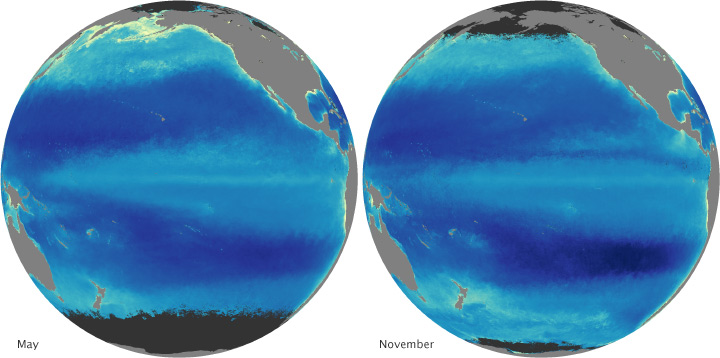
Think about that 40% decline. That’s not 40% in one location—that’s globally. Across all oceans. In just 75 years. Some regions have lost up to 50% of their phytoplankton biomass. To put it in perspective: imagine if 40% of all trees on Earth disappeared in your grandparents’ lifetime. You’d notice, right? The air would feel different. Weather patterns would change. Animals would vanish. That’s exactly what’s happening in our oceans. You just can’t see it from shore.
What Exactly Are Phytoplankton? (And Why Your Life Depends on Them)
Before we dive deeper into the crisis, you need to understand what we’re losing. Phytoplankton are microscopic plants that drift through the ocean’s upper layers. “Phyto” means plant, and “plankton” means drifter. Think of them as the grass of the sea—except this grass produces half the oxygen on Earth.
Why Phytoplankton Matter to YOU:
1. You’re Breathing Because of Them
Every other breath you take comes from phytoplankton. They perform photosynthesis just like land plants, converting CO2 into oxygen. But they do it on a scale that dwarfs all rainforests combined.
2. They Feed the Entire Ocean
Tiny fish eat phytoplankton. Bigger fish eat those fish. Even bigger fish eat those. All the way up to whales, seals, and the fish on your dinner plate. Remove phytoplankton, and the entire food chain collapses from the bottom up.
3. They Control the Climate
Phytoplankton absorb about 2 billion tons of CO2 annually—roughly 25% of what humans emit. When they die, many sink to the ocean floor, taking that carbon with them. This “biological carbon pump” has kept our planet cooler than it would otherwise be.
4. They Influence Weather Patterns
Phytoplankton release chemicals that help clouds form. More clouds mean more rain in some regions, more sun reflection back to space, and altered weather patterns. Their decline is already affecting global rainfall distribution.
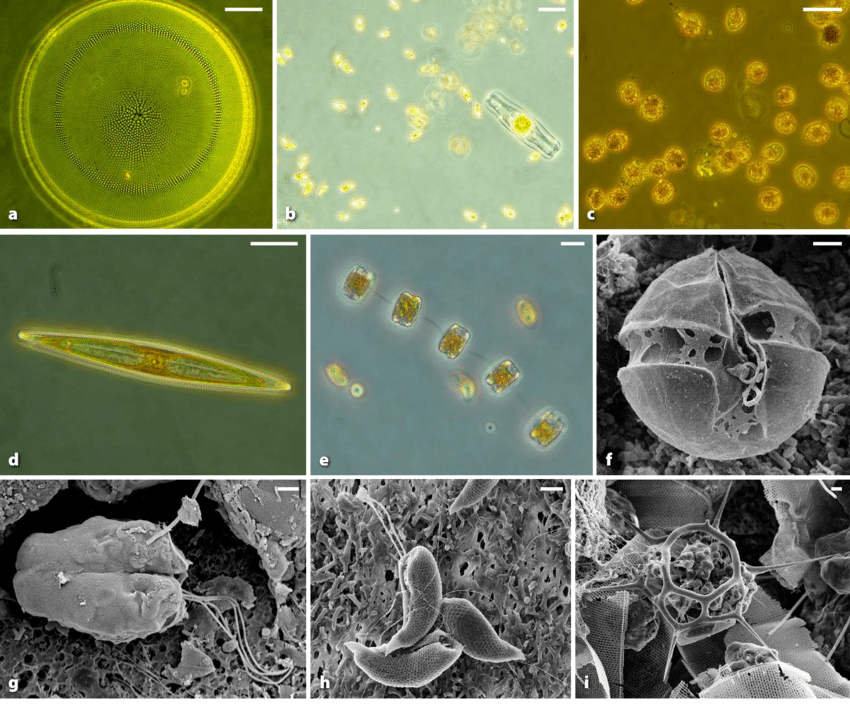
Here’s what makes the situation critical: phytoplankton aren’t just important—they’re foundational. You can’t replace them with technology. You can’t engineer a substitute. And once they collapse past a certain threshold, the damage cascades upward through every level of life on Earth.
The Phytoplankton Food Chain:
- PHYTOPLANKTON (microscopic plants)
- ZOOPLANKTON (tiny animals)
- SMALL FISH (sardines, anchovies, herring)
- MEDIUM FISH (salmon, mackerel, tuna)
- LARGE PREDATORS (sharks, whales, dolphins)
- HUMANS (3 billion depend on seafood)
The Perfect Storm: Five Killers Working Together
Phytoplankton aren’t dying from one cause—they’re getting hit from multiple directions simultaneously. It’s like being punched, kicked, and strangled all at once.
| Threat | Impact Level | How It Kills Phytoplankton |
|---|---|---|
| Ocean Warming | 35% | Blocks nutrient circulation from deep water |
| Ocean Acidification | 25% | Dissolves calcium carbonate shells |
| Nutrient Pollution | 20% | Creates toxic algal blooms and dead zones |
| Microplastic Contamination | 12% | Clogs cells, prevents photosynthesis |
| Overfishing Effects | 8% | Disrupts predator-prey balance |
1. Ocean Warming: Starving Them from Above (35%)
When you heat water, it stratifies—warm water floats on top of cold water, and they don’t mix well. This matters because nutrients that phytoplankton need (nitrogen, phosphorus, and iron) sink to the cold, deep water. Normally, ocean currents and seasonal temperature changes mix these layers, bringing nutrients back to the surface. It’s like a giant conveyor belt that delivers food to phytoplankton living in the sunny upper ocean. But as oceans warm, this mixing weakens. The temperature difference between surface and deep water increases, creating a stronger barrier. Phytoplankton get trapped in nutrient-poor surface water, like trying to grow a garden in sand.
The numbers: The ocean has warmed by 0.9°C since 1950. That 0.9°C represents an enormous amount of energy—enough to power the entire United States for 250 years.
2. Ocean Acidification: Dissolving Them Alive (25%)
The ocean has absorbed about 30% of all CO2 humans have pumped into the atmosphere since the Industrial Revolution. When CO2 dissolves in seawater, it forms carbonic acid. Ocean pH has dropped from 8.2 to 8.1 since 1800. That 0.1 drop represents a 30% increase in acidity. For phytoplankton with calcium carbonate shells—species like coccolithophores and foraminifera—this is catastrophic. The shells dissolve faster than the organisms can build them.
The evidence: Laboratory experiments show that at pH 7.8 (projected for 2100 if emissions continue), shell-forming phytoplankton can’t survive at all.
3. Nutrient Pollution: Death by Overeating (20%)
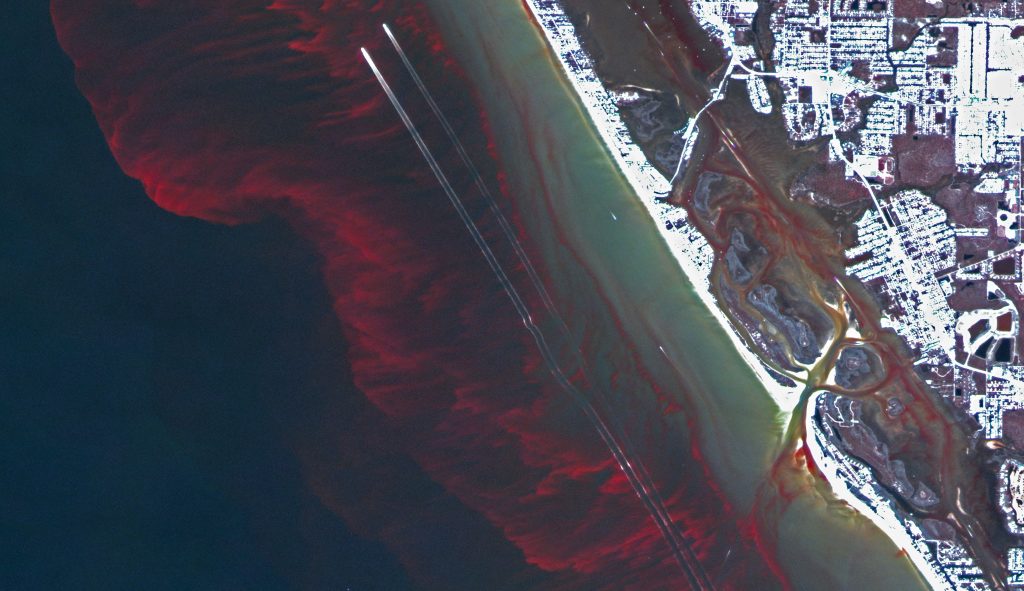
Agricultural runoff dumps massive amounts of nitrogen and phosphorus into coastal waters. This creates harmful algal blooms that outcompete beneficial phytoplankton species and produce toxins. When these blooms die, bacteria decompose the organic matter, consuming oxygen from the water. Oxygen levels drop so low that fish and other marine life suffocate. These are called “dead zones.”
The scale: The Gulf of Mexico dead zone now covers over 6,700 square miles—larger than Connecticut. There are now over 400 dead zones worldwide.
4. Microplastic Contamination: Pollution at the Cellular Level (12%)
Microplastics now outnumber phytoplankton in some ocean regions. Phytoplankton can’t tell the difference between food particles and plastic particles, so they ingest them.
Once inside, plastic physically clogs their cells, toxic chemicals leach into their tissues, they can’t photosynthesize properly, and they can’t reproduce normally.
Recent studies: Found microplastics in 100% of phytoplankton samples from the North Pacific.
5. Overfishing: Breaking the Balance (8%)
When you remove too many fish from the ocean, you disrupt the predator-prey relationships that keep phytoplankton communities balanced. Remove too many small fish, and jellyfish populations explode. Jellyfish eat enormous amounts of zooplankton, leaving certain phytoplankton species to overgrow.
The Ripple Effect: How Your Life Changes
| Fish Species | Population Decline | Why It Matters |
|---|---|---|
| Anchovies | 85% since 2000 | Foundation of many fisheries; feed larger fish |
| Sardines | 78% since 2000 | Major protein source in developing nations |
| Cod | 70% since 1990 | Once sustained entire coastal economies |
| Tuna | 65% since 1990 | $42 billion global market collapsing |
| Salmon | 58% since 2000 | Aquaculture struggling with wild stock collapse |
Your Grocery Bill Is Already Feeling It
Check seafood prices at your local market. Salmon that cost $8/pound now costs $18/pound. Tuna that was $12/pound is now $28/pound. Shrimp prices have doubled.
But it’s not just seafood. As fish populations collapse:
- Fishing communities lose income and buy less of everything
- Coastal tourism drops as beaches become lifeless
- Fish meal (used in chicken and pig feed) becomes scarce, raising meat prices
- Fertilizer made from fish becomes expensive, raising vegetable prices
3 Billion People Facing Protein Crisis
Over 3 billion people—nearly 40% of the global population—depend on seafood as their primary source of protein. These aren’t wealthy Americans deciding between salmon and chicken. These are families in the Philippines, Indonesia, West Africa, and Peru who have no other affordable protein option.
Sources:
- https://www.noaa.gov/education/resource-collections/ocean-coasts
- https://www.nature.com/subjects/phytoplankton
- https://www.fao.org/state-of-fisheries-aquaculture
Written and edited by Wrenlee B.
Related posts:

Wrenlee is a wildlife writer at VCanitBlog, specializing in animal behavior, habitats, and conservation. With years of experience exploring nature and researching biodiversity, she creates well-researched content to raise awareness about protecting wildlife.